
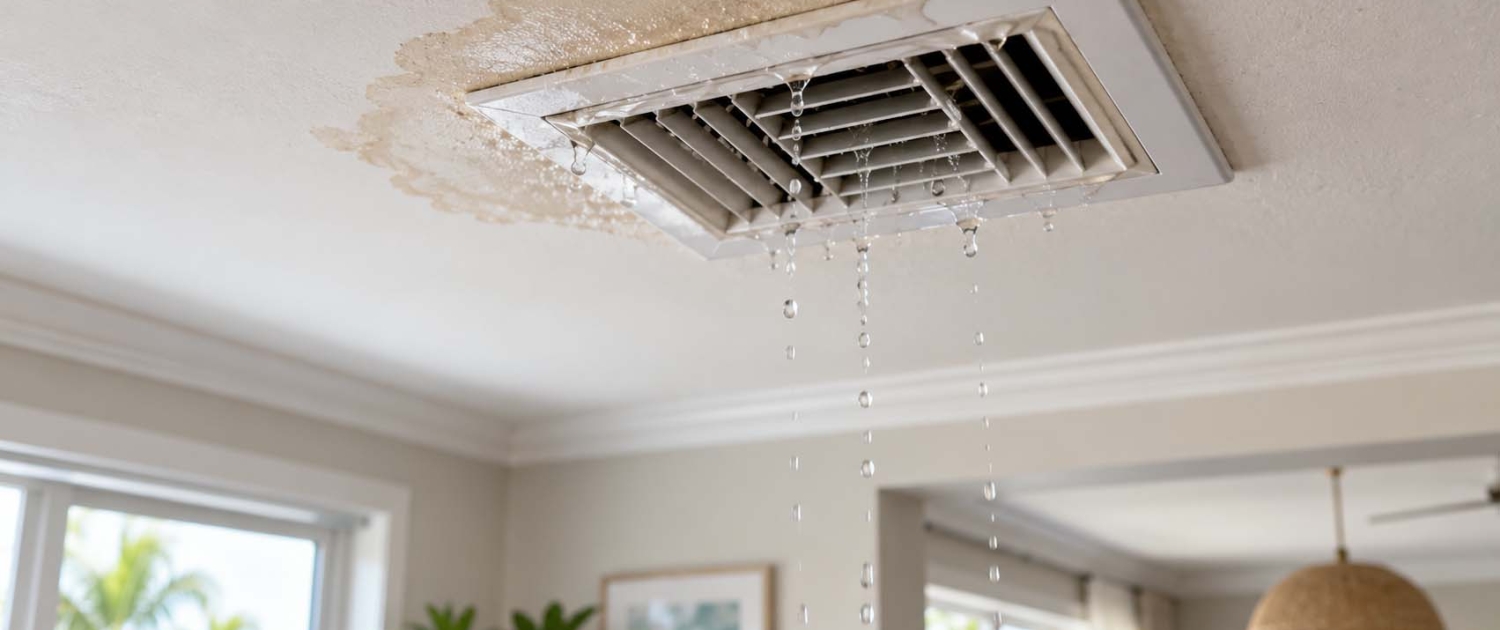
Water Dripping From Your Ceiling Vent? Do These Four Things First
Water dripping from an AC vent, a brown stain spreading across the ceiling or moisture collecting around your indoor HVAC unit should not be ignored.
In South Florida, air conditioning systems remove a significant amount of moisture from indoor air. When that water cannot drain properly, it may overflow from the HVAC system and show up around ceiling vents, walls, closets or the air handler.
If you notice an AC water leak, the first priority is stopping additional water damage and determining where the moisture is coming from.
Here are four things to do first.
1. Turn Your AC Off at the Thermostat
Turn the HVAC system completely off.
As long as the air conditioner continues running, it may continue producing condensation and adding water to the problem.
Do not simply raise the thermostat temperature. Set the system to off until the source of the leak has been identified.
2. Turn Off Power to the Air Handler if Water Is Near the Unit
If water has reached the air handler, electrical components or the area directly around the HVAC equipment, turn off power to the indoor unit at the breaker.
Water and electrical equipment should never be handled together.
If you are unsure which breaker controls the equipment or do not feel comfortable accessing the panel, leave the system off at the thermostat and call an HVAC professional.
3. Protect the Area From Water Damage
Place containers or towels under active drips and move furniture, electronics and other items away from the affected area.
If water is coming through the ceiling, act quickly. Drywall, insulation, flooring and nearby materials can absorb moisture and sustain damage.
4. Stay Away From a Bulging Ceiling
If the ceiling is swollen, sagging or visibly holding water, do not stand underneath it.
Waterlogged drywall can become heavy and unstable.
Avoid puncturing or disturbing a bulging ceiling unless you know how to handle the situation safely. Contact an HVAC professional and, if necessary, a water damage professional.
Why Is Water Leaking From My AC Vent?
Your air conditioner does more than cool the home. It also removes moisture from indoor air.
As warm air passes over the cold evaporator coil, moisture condenses on the coil and drips into a drain pan.
That water then travels through a condensate drain line and exits the home.
When something interferes with this drainage process, water can collect inside or around the HVAC system and eventually leak into surrounding areas.
Several problems can cause this.
Cause 1: A Clogged Condensate Drain Line
A clogged AC drain line is one of the most common causes of HVAC water leaks.
Condensate lines stay damp for long periods, especially in Florida. Over time, dirt, algae and other buildup can restrict or block the line.
When water can no longer drain properly, the drain pan may fill and overflow.
Possible signs of a clogged condensate line include:
- Water around the indoor HVAC unit
- A musty odor near the air handler
- Water stains near vents or ceilings
- High indoor humidity
- The AC shutting off unexpectedly
- Standing water in the drain pan
If the system repeatedly develops drain line clogs, the cause should be investigated rather than simply clearing the line each time.
Cause 2: A Cracked or Damaged Drain Pan
The drain pan underneath the evaporator coil collects condensation before it enters the drain line.
Older metal pans can corrode over time, while plastic pans may crack, shift or become damaged.
Even if the condensate drain itself is clear, a damaged pan can allow water to leak directly into the surrounding area.
Cause 3: A Frozen Evaporator Coil
A frozen evaporator coil can also lead to a sudden AC water leak.
When ice builds up on the coil and later melts, the amount of water entering the drain pan may exceed what the drainage system can handle.
Common causes of a frozen coil include:
- Restricted airflow
- Dirty air filters
- Blocked return vents
- Dirty evaporator coils
- Blower problems
- Refrigerant related issues
If you see ice on the indoor coil or refrigerant line, turn the system off and have the cause evaluated.
Continuing to operate an HVAC system with a frozen coil can make the problem worse.
Cause 4: A Float Switch Is Not Working
Many HVAC systems have a condensate float switch designed to shut the system off when water rises beyond a safe level.
If your AC suddenly stops operating and you notice water around the air handler, the float switch may have shut the system down to prevent an overflow.
Do not simply reset the system without determining why water accumulated.
If the system continues operating while the drain pan overflows, the float switch may be missing, incorrectly installed or not functioning properly.
An HVAC technician can inspect the drainage system and verify that the safety switch is working.
Cause 5: Condensation on Ductwork
Not every ceiling water stain comes from a clogged AC drain.
In some cases, condensation develops on the outside of cold ductwork.
This can happen when humid air reaches poorly insulated ducts, fittings or supply boots.
The resulting water may drip onto insulation or drywall and appear as a ceiling leak near an AC vent.
This type of problem requires a different solution than a clogged condensate drain.
Why Is Water Dripping From My Ceiling AC Vent?
If water appears directly around a ceiling vent, possible causes include:
- Condensation on the duct or vent
- Damaged or missing duct insulation
- Excess indoor humidity
- A leaking air handler above the ceiling
- A clogged condensate line
- A damaged drain pan
- A frozen evaporator coil that has thawed
Because several different HVAC problems can create similar symptoms, the location of the water alone does not always identify the cause.
What Can You Safely Check Yourself?
There are a few basic things homeowners can check before scheduling service.
Check the Air Filter
A heavily clogged filter can restrict airflow and contribute to evaporator coil freezing.
If the filter is dirty, replace it with the appropriate filter for your HVAC system.
Look for Visible Water Around the Air Handler
If you can safely access the indoor unit, look for standing water around the equipment or drain pan.
Do not remove HVAC panels or touch electrical components.
Check the Condensate Drain Outlet
If you know where the condensate line exits the home, inspect the area for obvious blockage.
If the AC has been running and no water is draining during humid conditions, there may be a restriction somewhere in the condensate system.
Inspect Accessible Vents
Look for visible condensation or moisture around supply vents.
Persistent condensation may indicate an insulation, humidity or airflow problem.
Should You Clean an AC Drain Line Yourself?
Some homeowners perform basic condensate drain maintenance themselves, but caution is important.
If you know where the correct condensate cleanout is located and the HVAC manufacturer or service professional has provided maintenance instructions, you may be able to perform routine flushing.
However, do not start disconnecting pipes, pushing objects into the drain or opening HVAC equipment if you are unsure what you are working with.
Improper drain cleaning can damage fittings or create additional leaks.
If water is already entering the home, professional inspection is usually the safer option.
What Should You Avoid Doing?
Do Not Keep Running the AC
Continuing to operate the system may produce more condensation and worsen the leak.
Do Not Ignore a Tripped Float Switch
A float switch usually trips because water has accumulated where it should not.
Resetting the equipment without correcting the drainage issue can lead to another shutdown or overflow.
Do Not Run the System With a Frozen Coil
Turn the AC off and allow the ice to thaw.
The cause of the freezing should then be diagnosed.
Do Not Disturb a Water Damaged Ceiling
If the ceiling is sagging or bulging, stay clear of the area and contact a professional.
When Should You Call an HVAC Professional?
Schedule HVAC service if:
- Water continues leaking after the system is turned off
- The condensate line repeatedly clogs
- You see ice on the evaporator coil or refrigerant line
- Water is collecting inside or around the air handler
- The drain pan appears damaged
- The AC will not restart
- The float switch continues to trip
- Ceiling stains or moisture keep returning
- You suspect duct condensation
- You cannot determine where the water is coming from
An HVAC technician can inspect the drainage system, evaporator coil, drain pan, float switch, airflow and ductwork to identify the actual cause.
How Can You Prevent AC Water Leaks?
Routine HVAC maintenance can reduce the likelihood of unexpected drainage problems.
Preventive steps include:
- Changing air filters regularly
- Keeping the condensate drain clear
- Having the drain pan inspected
- Checking the float switch
- Maintaining proper airflow
- Keeping coils clean
- Addressing humidity problems
- Inspecting duct insulation when condensation is present
Regular maintenance is especially important in South Florida, where HVAC systems operate heavily and manage high indoor moisture levels for much of the year.
AC Water Leak Repair in Palm Beach County
Mission Air Pro provides AC repair and preventive HVAC maintenance throughout Palm Beach County.
When we inspect an AC water leak, our technicians can evaluate the condensate drain, drain pan, evaporator coil, float switch, airflow and other components that may be contributing to the problem.
Our preventive maintenance services also include inspection of the condensate drainage system to help identify problems before they cause water damage.
Mission Air Pro serves residential and commercial properties throughout West Palm Beach, Wellington, Boynton Beach, Delray Beach, Boca Raton, Jupiter, Palm Beach Gardens, Greenacres, Lantana, Lake Worth, Royal Palm Beach and surrounding areas.
Request HVAC Service or call 954.826.2296 if you notice water leaking from your AC system.
Frequently Asked Questions
Why is water dripping from my AC ceiling vent?
Water around a ceiling vent may be caused by condensation on ductwork, damaged duct insulation, excessive humidity or a leak from HVAC equipment located above the ceiling.
Why is my AC leaking water inside the house?
Common causes include a clogged condensate drain line, damaged drain pan, frozen evaporator coil or drainage problem around the indoor HVAC unit.
Should I turn my AC off if it is leaking water?
Yes. Turning the system off can prevent it from continuing to produce condensation while you determine the cause of the leak.
Why did my AC suddenly shut off when there is water around it?
A condensate float switch may have shut the HVAC system down because water accumulated in the drain pan or drain line. The source of the drainage problem should be corrected before the system is restarted.
Can a dirty air filter cause an AC water leak?
A dirty filter can restrict airflow and contribute to evaporator coil freezing. When the ice melts, excess water can overwhelm the drainage system and cause leaking.
Is water leaking from an AC an emergency?
It can become urgent if water is reaching electrical components, damaging ceilings or flooring, or causing the ceiling to sag. Turn the HVAC system off and arrange service promptly if significant water is present.
