
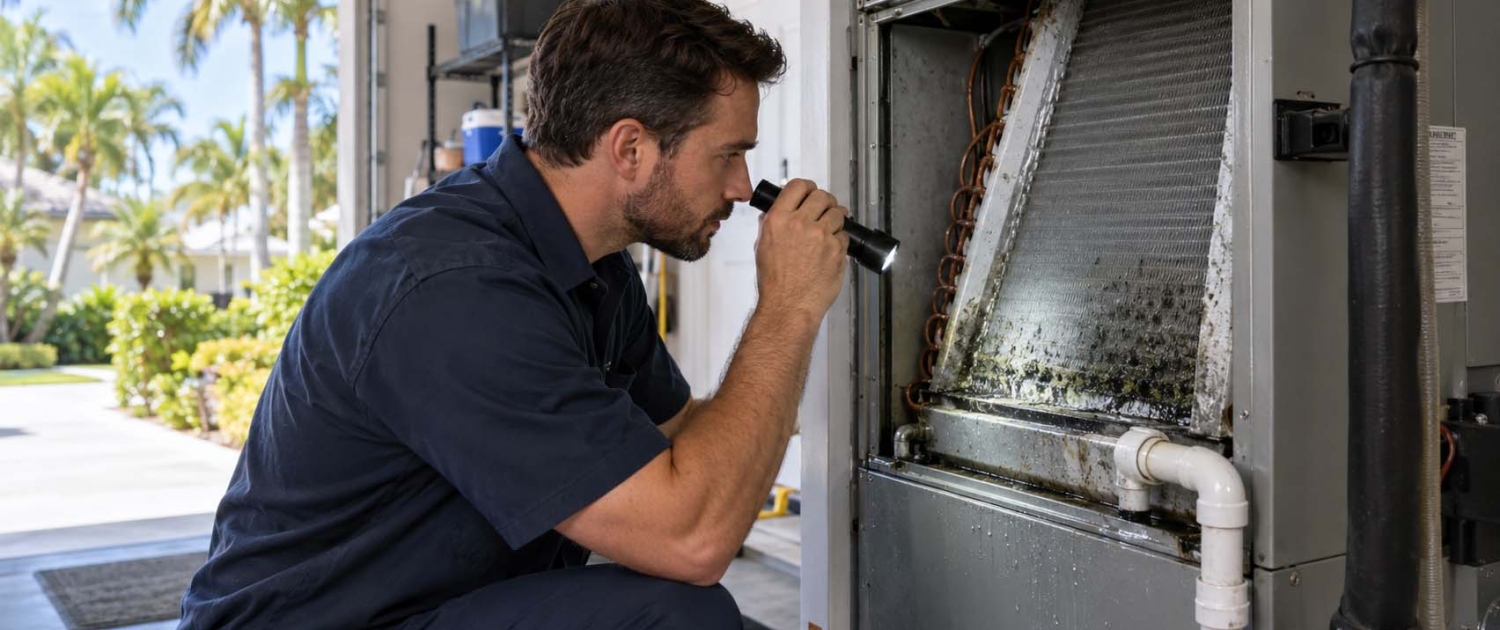
Mold in Your Air Conditioner? Signs, Causes and How to Prevent It
A musty smell coming from your vents, excess humidity inside your home or visible moisture around your HVAC system can make you wonder whether there is mold in your air conditioner.
In South Florida, that concern is especially common. High humidity and long cooling seasons mean air conditioning systems handle a significant amount of moisture throughout the year.
Not every odor or moisture issue means mold is present, but recurring musty smells, drainage problems and persistent humidity are all signs that your HVAC system should be inspected.
Here are the most common signs, causes and prevention tips homeowners should know.
What Causes Mold in an Air Conditioner?
Mold needs moisture to grow.
Your air conditioning system naturally creates condensation as it removes heat and humidity from the indoor air. Under normal conditions, that moisture drains away through the condensate system.
Problems can develop when moisture remains inside or around HVAC components.
Common causes include:
- Clogged condensate drain lines
- Standing water in the drain pan
- Dirty evaporator coils
- Restricted airflow
- Excess indoor humidity
- Poor ventilation
- Leaks around HVAC equipment
- Oversized air conditioning systems
- Improper system operation
- Dirty or neglected filters
When moisture combines with dust and organic debris, conditions may become more favorable for microbial growth.
What Are the Signs of Mold in an AC System?
It is not always possible to confirm mold just by looking at or smelling your HVAC system.
However, several warning signs may indicate a moisture or indoor air quality problem.
Possible signs include:
- A musty smell when the AC turns on
- Persistent odors coming from vents
- Visible moisture around the indoor HVAC unit
- Water collecting near the air handler
- Condensation in unusual areas
- High indoor humidity
- Recurring condensate drain clogs
- Visible growth around vents or accessible HVAC components
These signs do not necessarily prove mold is present, but they are good reasons to have the system inspected.
Why Does My AC Smell Musty?
A musty smell from your air conditioner is often associated with moisture somewhere in the HVAC system.
Possible sources may include:
- The evaporator coil
- Drain pan
- Condensate drain line
- Ductwork
- Air handler
- Dirty filters
- Damp insulation
- Areas where condensation is accumulating
If the smell appears every time the system starts, covering it with air freshener will not solve the underlying problem.
The source of the moisture or odor needs to be identified.
Can Mold Grow on an AC Evaporator Coil?
The evaporator coil is one area where moisture is naturally present.
Warm indoor air passes over the cold coil, causing moisture in the air to condense. That water should then drain away through the condensate system.
If the coil becomes dirty or the surrounding area remains damp, organic material and moisture may create conditions that support microbial growth.
Regular HVAC maintenance can help keep coils clean and ensure the drainage system is functioning properly.
Can a Clogged AC Drain Line Cause Mold Problems?
A clogged condensate drain line can create standing water inside or around the HVAC system.
When condensation cannot drain properly, water may collect in the drain pan or overflow into nearby areas.
This can lead to:
- Water damage
- Musty odors
- High humidity
- Moisture around HVAC components
- Conditions that may support mold growth
Recurring drain line problems should not be ignored.
Can High Humidity Cause Mold in Your HVAC System?
High indoor humidity can increase the risk of moisture related problems.
Your air conditioner helps control humidity by removing moisture from the air during the cooling process.
If indoor humidity remains high even while the AC is running, there may be a problem with:
- System sizing
- Airflow
- Equipment performance
- Ductwork
- Building air leaks
- Ventilation
- Thermostat operation
An HVAC technician can help determine whether the system is removing moisture effectively.
Can an Oversized AC Cause Humidity Problems?
Yes.
An oversized air conditioner may cool the home very quickly and then shut off before it has had enough time to remove sufficient moisture from the air.
This is sometimes called short cycling.
A home may feel cool while still feeling damp or sticky.
That is one reason proper HVAC sizing is important in Florida. A system should be selected based on the property’s actual cooling requirements, not simply on the idea that bigger is better.
How Can You Prevent Mold in Your Air Conditioner?
Preventing moisture buildup is one of the most important steps.
Change Your Air Filter Regularly
A dirty air filter can restrict airflow and affect how the HVAC system operates.
Check your filter regularly and replace it according to the filter type, household conditions and system usage.
Keep the Condensate Drain Clear
The condensate system needs to remove moisture from the HVAC system properly.
A clogged or partially blocked drain can lead to water buildup and overflow.
Schedule Regular HVAC Maintenance
Professional maintenance can help identify:
- Dirty coils
- Drainage problems
- Airflow restrictions
- Water leaks
- Equipment performance issues
- Humidity control problems
Routine inspections can help catch smaller problems before they become larger ones.
Keep Indoor Humidity Under Control
If your home consistently feels humid or damp, do not ignore it.
Persistent humidity may indicate that your HVAC system is not removing moisture effectively.
Address Water Leaks Quickly
Any ongoing water leak can create moisture problems inside the home.
Leaks around the HVAC system, roof, plumbing or windows should be addressed as soon as possible.
Keep Vents and Returns Clear
Blocked supply or return vents can interfere with airflow and system performance.
Make sure furniture, rugs and other objects are not blocking airflow.
Do UV Lights Help Prevent Mold in HVAC Systems?
UV lights are sometimes installed inside HVAC systems to help reduce microbial growth on certain surfaces.
They may be useful in some applications, especially near areas where moisture is commonly present.
However, UV lights do not fix the underlying source of moisture.
If your HVAC system has drainage problems, condensation issues or excessive humidity, those conditions still need to be corrected.
UV technology can be one part of an indoor air quality strategy, but it should not replace proper HVAC maintenance and moisture control.
Can an Air Purifier Remove Mold?
Air purifiers can help reduce certain airborne particles depending on the filtration or purification technology being used.
However, an air purifier will not solve an active moisture problem or remove contamination growing inside HVAC equipment.
If mold or microbial growth is suspected, the source of the moisture should be identified first.
An air purification system may then be considered as part of a broader indoor air quality plan.
Air Purifier or Dehumidifier: Which Is Better?
They address different problems.
Air Purifier
An air purifier is designed to reduce certain airborne particles and contaminants.
Dehumidifier
A dehumidifier removes excess moisture from indoor air.
If your primary problem is high humidity, a dehumidifier may be more relevant.
If your concern is airborne particles, filtration or purification may be more appropriate.
Some homes may benefit from both, depending on indoor conditions and HVAC performance.
What Indoor Humidity Level Is Best in Florida?
There is no single number that works perfectly for every home, but indoor humidity should remain low enough to prevent the space from feeling damp or sticky.
Warning signs of excess humidity include:
- Condensation on windows
- Damp feeling rooms
- Musty odors
- Moisture around vents
- Difficulty staying comfortable
- Visible condensation around HVAC equipment
A simple indoor humidity monitor can help you see whether humidity remains elevated throughout the day.
Should You Clean Mold From Your AC Yourself?
Homeowners can safely handle basic HVAC maintenance tasks such as changing filters and keeping accessible areas clean and dry.
However, you should be cautious about cleaning suspected mold inside HVAC equipment or ductwork yourself.
HVAC components can contain electrical parts, refrigerant lines and delicate equipment.
If you see significant visible growth, persistent moisture or recurring musty odors, it is better to have the system professionally evaluated.
Depending on the extent and location of the problem, a separate mold assessment or remediation professional may also be appropriate.
When Should You Call an HVAC Professional?
You should schedule an inspection if:
- Your AC smells musty
- Water is collecting around the indoor unit
- Indoor humidity remains high
- The condensate drain repeatedly clogs
- Airflow has changed
- Your AC is not cooling properly
- You see visible moisture or unusual buildup around HVAC components
- Your home feels damp even when the temperature is comfortable
An HVAC technician can determine whether the issue is related to drainage, airflow, humidity, equipment performance or another mechanical problem.
Indoor Air Quality Services in Palm Beach County
Mission Air Pro provides HVAC and indoor air quality services throughout Palm Beach County.
Our licensed and insured team can inspect HVAC systems for moisture related problems, airflow issues, drainage concerns and humidity control problems.
We also provide air purification, filtration, UV system and humidity control solutions based on the needs of the property.
Mission Air Pro serves homeowners and commercial properties throughout West Palm Beach, Wellington, Boynton Beach, Delray Beach, Boca Raton, Jupiter, Palm Beach Gardens, Greenacres, Lantana, Lake Worth, Royal Palm Beach and surrounding areas.
Request a Free Estimate or call 954.826.2296 to schedule HVAC service.
Frequently Asked Questions
Can mold grow inside an air conditioner?
Yes. HVAC systems naturally produce condensation, and areas that remain damp may create conditions that support microbial growth.
Why does my AC smell musty when it turns on?
A musty smell may be related to moisture, dirty coils, drainage problems, damp ductwork or other HVAC conditions. The source should be inspected rather than simply covering the odor.
Can a dirty air filter cause mold?
A dirty filter does not directly cause mold, but it can restrict airflow and contribute to HVAC performance and moisture problems.
Does AC help prevent mold?
A properly operating air conditioner helps remove moisture from indoor air. Good humidity control can reduce conditions that support mold growth.
Do UV lights kill mold in HVAC systems?
UV lights may help reduce microbial growth on certain HVAC surfaces, but they do not solve moisture problems or replace cleaning and maintenance.
Can a dehumidifier help prevent mold?
A dehumidifier can help reduce excess indoor moisture. If humidity is consistently high, it is also important to determine why the HVAC system or home is not controlling moisture effectively.

